Drake, Reid and Kolohon (2014) present two preliminary steps for
designing relevant and meaning learning experiences: know your curriculum
documents and know your students. Beginning teachers are typically concerned
with the content of the curriculum and overwhelmed with making sure they are
following professional protocol. However, I think more emphasis first and
foremost should be placed on knowing your students and building relationships
with them. The curriculum should be used as a framework that outlines what to
teach. The teacher holds the power of how they will teach it to make the
curriculum come alive and meet the individual needs of the classroom. This is
exactly why there is no specific formula or step-by-step guide for teaching.
Throughout my educational experiences, I have come across teachers who use
their same lesson plans and assign the same projects for a unit of study year
after year. These teachers fail to take into consideration that each student
that enters the classroom brings different realm of experiences, prior
knowledge, interests and learning styles. “The curriculum can be relevant only
when it connects to students’ interests and experiences” (Drake et al, 2014).
For significant learning to occur, teachers must invest in their student’s
lives and spend the time to show that they care.
“Children don’t care how much you know, until they know how much you
care”
https://www.youtube.com/watch?v=SFnMTHhKdkw
Robert Marzano
(2003) explains how building positive relationships with students will reduce
behavioural problems and improve classroom management. A teacher’s ability to establish and
maintain an environment that is suited to teaching and learning is enhanced
through mutual respect. If the students feel as if they are respected, they
are more inclined to respect their teacher leading to fewer rule violations and
discipline problems. This article suggests an interaction of appropriate
dominance and cooperation in building effective student-teacher relationships.
Marzano (2003) outlines strategies to foster cooperation such as giving students
choice in the classroom to accommodate their interests, providing recognition
and praise for student achievement, giving each student personal attention and
involving all students in classroom learning, not those who just raise their
hand most frequently. Another method in promoting cooperation is to allow for
constructivism in the classroom, where the teacher and students build knowledge
together through classroom discussion. Allowing for discussion shows students
that you are approachable and open to new ideas, as well as interested in what
students have to say. Therefore, the quality of student teacher relationships
acts as a foundation for effective classroom management and student learning.
In my opinion, a school day presents many opportunities for teachers to
get to know their students and to build a relationship with them. My past
teachers have given assignments that allow for students to share their
interests and experiences. Depending on the grade level or subject area, as an
example, students could create a collage or a website that relates to their
interests or goals. Also, I found that simple
gestures, such as the teacher asking me about my day or by calling on me to
share my opinion in class made me feel more comfortable and supported by my
teacher. In particular, I developed strong relationships with the teachers who engaged
in extracurricular activities and made the effort to get to know students
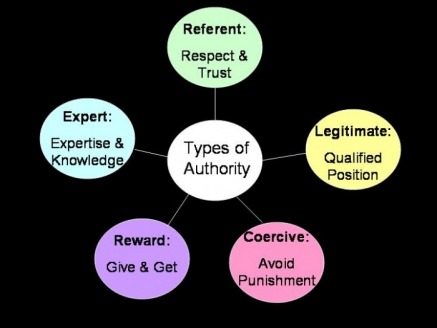
outside of the classroom. Teachers who have acted as a referent authority have
had the greatest impact on my learning and educational experiences. When a
teacher has a referent authority, “students will view the teacher as a good
person who is concerned about them, cares about their learning and demands a
certain type of behaviour because it is in their best interests” (Levin, Nolan,
Kerr, Elliot, Bajovic, 2015).
 |
| http://edu518top10.weebly.com/uploads/1/9/5/3/1953656/9647332.jpg?438x326 |
References
Drake, S.,
Kolohon, W., & Reid, J. (2014) Interweaving curriculum and classroom
assessment: Engaging the 21st Century Learner. Don Mills, ON: Oxford
University Press.
Marzano,
R. (2003). Educational Leadership: The
key to classroom management. Retrieved from http://www.ascd.org/publications/educational-leadership/sept03/vol61/num01/The-Key-to-Classroom-Management.aspx
Levin, J., Nolan, J., Kerr, J.,
Elliot, A., Bajovic, M. (2015). Principles of Classroom Management: A professional decision-making model.
Don Mills, ON: Pearson Canada Inc.

Kassi,
ReplyDeleteThe first thing I have to say about your blog is that your choice of video is excellent. It was highly informative, the speaker in the video was clearly very interested and experienced in this topic, and it really helps to set the tone for your writing. This is not to devalue your writing, which I also thing is very good; I just thoroughly enjoyed the video. Speaking of which, I was impressed by your structure and use of sources throughout the blog; every idea that was not personal to you was followed by a source and each section was cited. I also enjoyed the way that you included examples that you have experienced as it gave the blog a more personal tone which, along with the video, reminded the reader of the human aspect of education. One aspect of your blog which I do question however is the inclusion of the quote “Children don’t care how much you know, until they know how much you care.” I believe that, while this quote does share the importance of good student-teacher relationships, it devalues the importance of expert authority, a concept which you yourself reference later on with your graphic. This could however just be a misinterpretation of the quote on my part. Moving forward, I think an excellent expansion on this topic (potentially for your next blog) could be a look into how teachers can develop these relationships and what kinds of relationships there can be. You stated that you enjoyed teachers who took part in extracurricular activities, and I personally developed the best relationships with teachers who just did the basics of the job wonderfully and explained every concept well. This is just two examples, but there could be many more types of relationships as there are many personality types among students. This could be structured similarly to the types of authority discussion, i.e. extracurricular relationships, fundamental relationships, humor-based relationships, etc. In conclusion, I think your blog was very well-done and touched meaningfully on several important concepts. Looking forward to reading your blog again!
Kassi,
ReplyDeleteFirst off, I like the personal experiences you provided. You talked about what you enjoyed as a student and I feel that is a very useful tool when it comes to determining who we are going to be as teachers. I've been struggling with making my blogs more personal and I feel like this is a great example of how to do so. Secondly, you did a great job of tying in the Marzano article to your topic. As previously mentioned, your article relies heavily on your personal experiences, but this particular article backs up your claims and proves that positive relationships are extremely important. It would have been nice if you addressed your article in the body of your post instead of just sticking it in there. It was a really eye-opening clip and I would have enjoyed hearing what you had to say about it. Overall, you did a great job of expanding on a smaller topic within the textbook and I look forward to reading what you come up with next.
Kassi,
ReplyDeleteI wanted to begin by stating that I really like the overall meaning of your blog. I think that it is a very important topic that we do not discuss in such terms, and I like the way that you put it. I really enjoyed the quote at the top, saying that “Children don’t care how much you know until you know how much they care”. I think this is really important, but don’t forget to cite it! I enjoyed your use of personal experience throughout your blog. Moving forward I think that it would be beneficial to include how you plan to use these practices, and how you plan to be the kind of teacher that is beneficial towards the students. One thing that I would like to see from your blog is hyperlinked resources, which (it may have just been my computer) I did not see. The video you used was not only appropriate but very motivational and knowledgeable. I think that this was a fantastic resource to use! Thought it was a longer video, I did not find it too long and could remain engaged the whole time which is perfect. Great work!