Monday, 13 March 2023

Supporting Students Mental Health in the Classroom

The Reality of Mental Health Among Youth

Mental health is a growing concern among students in schools and can act as a significant barrier to learning.

 According to the Ontario College of Teachers:

  • 1 in 5 students experience a mental health illness or concern each year. 

  • Suicide is the 2nd leading cause of death among teens.

  • 1.2 million children and youth are affected by mental illness.

  • Less than 20% receive appropriate treatment. 


What Can We Do

In the classroom, we are interacting with students every day who have mental health concerns or who are reporting poor mental health. Teachers have the opportunity to develop relationships and take on the role as a trusted, caring adult in students' lives. Therefore, we are well positioned to teach students about mental health, to identify students at risk, and connect them with additional support.


 Let’s look at what we can do:

  1. Create a Safe Space

  • Welcome students. Smile and greet students as they enter the classroom.

  • Build relationships. Get to know students, find out about their interests and ask questions to promote discussion. Show that relationships come first. 

  • Establish clear expectations, procedures and predictable routines that promote physical and emotional safety. 

  • Create a calming physical environment. It may be appropriate to allow for music, change the lighting and/or provide time for movement in the classroom.

  • Identify a separate space for students to go to take a break from the classroom as needed. 

  • Allow students to access healthy food programs if available. Students may need food in their stomachs before setting into the classroom. 

  • Check in with students often.

  • Be aware of student dynamics and be prepared to intervene if required. 

  • Anticipate and create a plan for potentially dysregulating activities. 

  • Allows for breaks as needed. 


  1. Have Discussions and Educate your Students About Mental Health

  • Set aside time for social emotional learning to take place. Create and deliver lessons on topics related to mental health, coping strategies, healthy relationships etc.

  • Discuss stigma with students and create an environment where students feel comfortable discussing mental health.

  • Teach emotional literacy. Educate students about how to recognize and name their emotions.

  • Discuss the difference between positive and negative coping strategies. Model positive coping strategies that promote mental health and practice them within the classroom. 

  • Make students aware of in-school supports, community supports and  crisis hotlines.

  • Discuss what you can do to support a friend who is struggling with their mental health. Role play and provide examples. 

  • Identify ways to enhance and maintain mental health. 


  1.  Identify and Report Any Potential Concerns

Students may not disclose that they are struggling and therefore it is important to pay attention and be aware of changes in student behaviour. There are many different types of mental illness and only a doctor can diagnose a student with a mental health illness. However, as educators we can look out for the following warning signs:

  • Significant drops in school marks

  • Changes to sleeping or eating habits

  • Avoiding friends and family

  • Frequent, angry outbursts

  • Drinking a lot and/or using drugs

  • Not doing things they usually like to do

  • Worrying constantly

  • Frequent mood swings

  • Obsession or lack of concern about weight/appearance

  • Lacking energy or motivation

  • Feeling down

  • Engaging in risky behaviour

  • Self harm or hiding areas of their bodies


Report these concerns to your school support team. This may include a school principal, school social worker, youth counsellor and/or school board psychologist. As appropriate, report concerns to parents or ask assistance from your school support team with this. 


  1. Listen and Validate

  • Students may come to you to report mental health concerns or you may hear from other students that they are concerned about a classmate. 

  • Listen to student concerns and validate how they are feeling. 

  • Remember it is not our job as teachers to suggest treatment options.

  • Do not downplay student situations by trying to help them see that it is not that big of a deal. 

  • Consider connecting to others in the circle of support depending on the nature and severity of your concern.  Follow your school and board protocols and pathways.

  • Let students know before they disclose anything that you have a duty to report information if it involves their safety. 

  • You can say to students “Thank you for sharing this with me. It must be incredibly difficult what you are going through and I can see that XYZ is really impacting you. Are you okay if I get someone else involved to help us with this i.e. school social worker for example?  

  • Always document and keep good records of your observations and conversations with students.


Report these concerns to your school support team. This may include a school principal, school social worker, youth counsellor and/or school board psychologist. As appropriate, report concerns to parents or ask assistance from your school support team with this. 


Reference


College of Teachers, 2018 Professional Advisory: Supporting Students’ Mental Health.

https://www.oct.ca/resources/advisories/mental-health

Thursday, 8 October 2015

Know Your Curriculum, Know Your Students

Drake, Reid and Kolohon (2014) present two preliminary steps for designing relevant and meaning learning experiences: know your curriculum documents and know your students. Beginning teachers are typically concerned with the content of the curriculum and overwhelmed with making sure they are following professional protocol. However, I think more emphasis first and foremost should be placed on knowing your students and building relationships with them. The curriculum should be used as a framework that outlines what to teach. The teacher holds the power of how they will teach it to make the curriculum come alive and meet the individual needs of the classroom. This is exactly why there is no specific formula or step-by-step guide for teaching. Throughout my educational experiences, I have come across teachers who use their same lesson plans and assign the same projects for a unit of study year after year. These teachers fail to take into consideration that each student that enters the classroom brings different realm of experiences, prior knowledge, interests and learning styles. “The curriculum can be relevant only when it connects to students’ interests and experiences” (Drake et al, 2014). For significant learning to occur, teachers must invest in their student’s lives and spend the time to show that they care.

“Children don’t care how much you know, until they know how much you care”

This education Ted Talk discusses the importance of building relationships with students in creating positive learning outcomes.
https://www.youtube.com/watch?v=SFnMTHhKdkw

           Robert Marzano (2003) explains how building positive relationships with students will reduce behavioural problems and improve classroom management. A teacher’s ability to establish and maintain an environment that is suited to teaching and learning is enhanced through mutual respect. If the students feel as if they are respected, they are more inclined to respect their teacher leading to fewer rule violations and discipline problems. This article suggests an interaction of appropriate dominance and cooperation in building effective student-teacher relationships. Marzano (2003) outlines strategies to foster cooperation such as giving students choice in the classroom to accommodate their interests, providing recognition and praise for student achievement, giving each student personal attention and involving all students in classroom learning, not those who just raise their hand most frequently. Another method in promoting cooperation is to allow for constructivism in the classroom, where the teacher and students build knowledge together through classroom discussion. Allowing for discussion shows students that you are approachable and open to new ideas, as well as interested in what students have to say. Therefore, the quality of student teacher relationships acts as a foundation for effective classroom management and student learning.
                                     

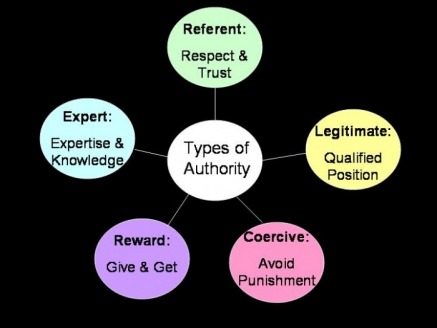
In my opinion, a school day presents many opportunities for teachers to get to know their students and to build a relationship with them. My past teachers have given assignments that allow for students to share their interests and experiences. Depending on the grade level or subject area, as an example, students could create a collage or a website that relates to their interests or goals.  Also, I found that simple gestures, such as the teacher asking me about my day or by calling on me to share my opinion in class made me feel more comfortable and supported by my teacher. In particular, I developed strong relationships with the teachers who engaged in extracurricular activities and made the effort to get to know students outside of the classroom. Teachers who have acted as a referent authority have had the greatest impact on my learning and educational experiences. When a teacher has a referent authority, “students will view the teacher as a good person who is concerned about them, cares about their learning and demands a certain type of behaviour because it is in their best interests” (Levin, Nolan, Kerr, Elliot, Bajovic, 2015).

http://edu518top10.weebly.com/uploads/1/9/5/3/1953656/9647332.jpg?438x326
References

Drake, S., Kolohon, W., & Reid, J. (2014) Interweaving curriculum and classroom assessment: Engaging the 21st Century Learner. Don Mills, ON: Oxford University Press.

Marzano, R. (2003). Educational Leadership: The key to classroom management. Retrieved from http://www.ascd.org/publications/educational-leadership/sept03/vol61/num01/The-Key-to-Classroom-Management.aspx

Levin, J., Nolan, J., Kerr, J., Elliot, A., Bajovic, M. (2015). Principles of Classroom Management: A professional decision-making model. Don Mills, ON: Pearson Canada Inc.